Sixty minutes at a ryokan
Another round of focus aerobics, this time from a bench outside an old hotel

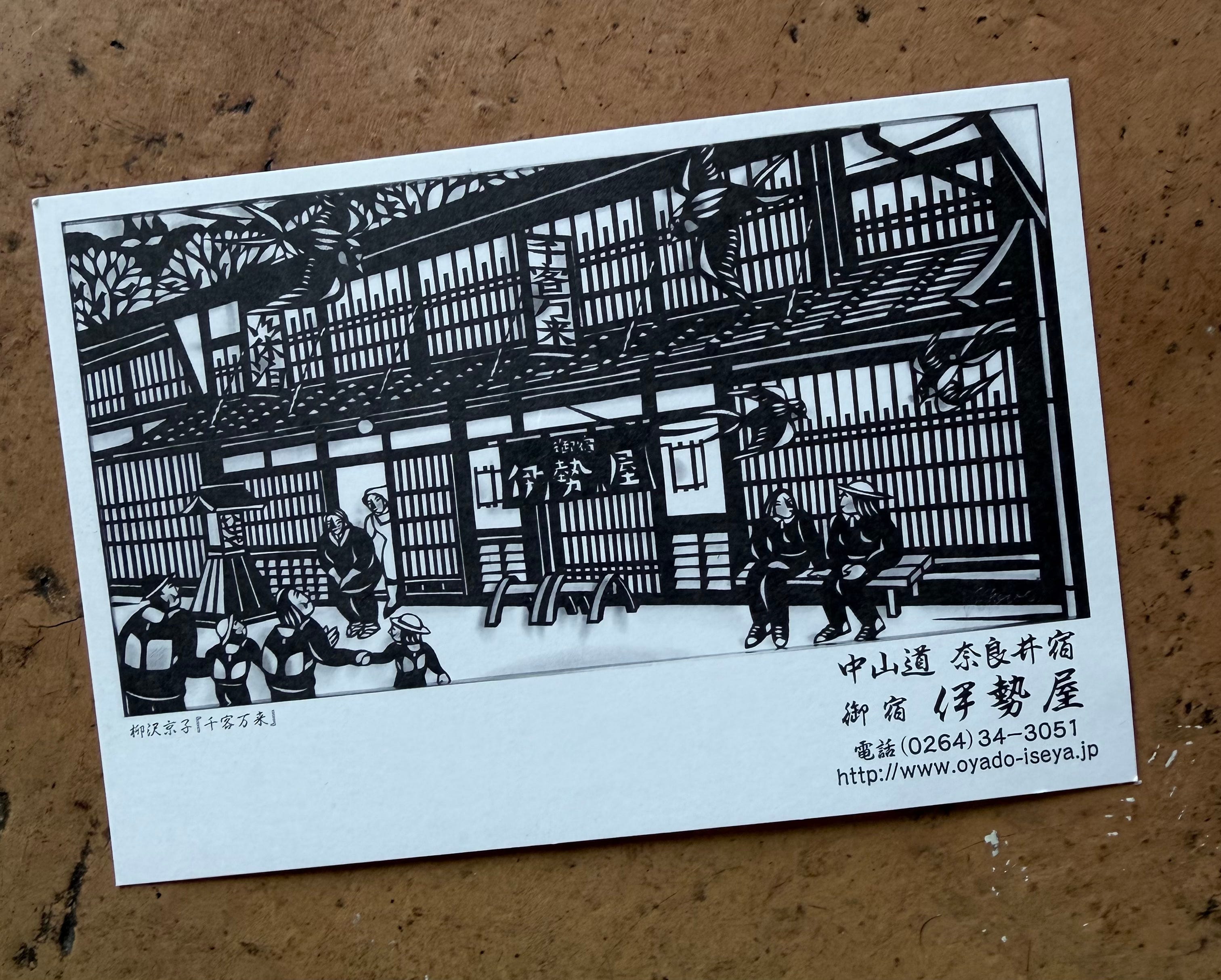
Snow: I sensed it from a hush in the air, a glow behind the window, then a guy down the hall, one of the other walkers in Japan, texted me around sunrise to let me know. I dressed, jogged outside. I hadn’t seen snow in maybe a year.
Memories came flooding, from growing up in New England to attending school in Maine… years in New York City, Paris, France, even the South… and the book Snow Falling on Cedars, the movie Smilla’s Sense of Snow…
I ran back up to my room, put on more clothes and grabbed my notebook.
Regular readers know I do a “focus aerobics” column here once a month where I go somewhere and sit for an hour. So, a few steps from the front door of a ryokan, part of the long walk I did a couple weeks ago, previously written about here (including a run-down of the gear employed), where, down the trail, there was a parking lot with benches and (crucially) a vending machine selling hot coffee in cans.

I bought two cans, opened one, took a bench and watched the snow.
I did the thing like I was a kid again: stuck out my tongue.
The ryokan where we slept, an old hotel, was atop a mountain we hiked the day before, though it was also accessible by car. And the parking lot where I was sitting could fit maybe twenty cars, though it wasn’t for the hotel, I discovered, but something else: a frisbee-golf course. I.e., behind my bench was a small hut where you could rent frisbees. I smiled at the oddity—a game I associate with American college students, only a few feet from an old pilgrims’ inn—but why not?
Drinking coffee, watching snow fall on a frisbee-golf center, made a writer think for a minute about composing a haiku in his notebook, so he did:
O, coffee machine.
You have a pachinko game!
I never win.
And it’s true, some coffee machines in Japan have little games. Where you purchase a can of Georgia Emerald Mountain Blend, maybe a BOSS Café au Lait, and afterwards the lights on the display do a dance, perchance to award you with more coffee. Though like the poem says…
Note to self: no snowflake is the same—thank you, Wilson Bentley—but they do look the same when you forget to bring your glasses.
In the hour, for the most part the only people I saw were drivers: people motoring cars or little vans past the hotel, down the mountain to wherever they’re going—driving cautiously, wipers going, twice with children inside.
I think about how dry snow can ripple, dry snow can billow. But wet snow hugs, wet snow clings.
For an hour, I did see quite a few non-human animals: several grayish birds, also a small thing I took for a mouse, scurrying from his or her covered spot. And there was the sound of cars and trucks at a distance—at one point I think I heard a train, but it could be anything that whistled.
I had on clothes, but not enough. Pants, socks, sneakers. T-shirt, puffy coat, shell. All fine if I was moving, but this was a sitting exercise. At thirty-five minutes, I got up and dug for coins, spent 175 yen on a third coffee, “premium gold” with milk and sugar, and it wasn’t delicious but it was hot, I gulped it down.
No can is big enough
For my appetite this morning.
Maybe: want less.
One of the ryokan we stayed in that week was around 250 years old. One night, a different spot, one of the women running the place introduced herself as a 16th-generation hotelier. Had I met anyone before doing what their great-great-great (etc etc etc) ancestor once did, in the same place?
The snow stopped after forty minutes. Flakes on the ground melted, hugged my pants and melted. Meanwhile, the temperature seemed to drop.
Snow sublimates. Snow also slides.
When is a first snow not wondrous? Obviously, if it’s not wanted or appreciated. And there are many snows that aren’t great: too much snow, sludgy snow, dirty snow in giant piles. Big snows that need shoveling to keep your roof from caving in. Snow can suffocate a person, snow can kill. I’m thinking through all of this, watching snow melt on the pavement—at the same time it’s hard not to be seduced, aesthetically.
Around minute fifty, I was up and pacing, fingertips cold. I noticed the frisbee-golf map was indecipherable, Japanese-only. And there was a covered rest stop nearby, similar to a bus stop, where a faded wanted poster showed seven criminals, but it was also Japanese-only, and I couldn’t read about their crimes. A friend who reads Japanese confirmed this for me later, he said the poster’s probably been there for twenty years, unfortunately I forget in the moment to ask him what the men did.
At minute fifty-two, fifty-three, a fellow walker came outside and we talked about the snow, the wonder. My cargo pockets clanked with coffee cans, he asked where I got them, I pointed him down the trail. An hour later, after breakfast, we headed out, and we left the snow behind us.
Composing this meditation several weeks later, I found a haiku by John Brandi in Poetry magazine, I really like it:
a party
where everyone says goodbye
then stays
𓀠 Tomorrow’s three-plus things for premium subscribers:
Ten favorite reads from 2025 described with 10-word poems
The best headphones for air travel, tested
My favorite song from my favorite 2025 jazz album
If you haven’t yet, level up for just $6 per month and get Sunday’s three-plus things to love: new music, great books, shopping/fashion picks and cool stuff generally!
❀ Hey, if you’re a writer looking for help—editing, coaching, brainstorm juju—I recommend collaborating with Rachel Knowles.
Rachel has helped me significantly over the years, not to mention lots of other writers: novelists, screenwriters, Substack-ers, the gamut. Whether you’re aspiring or established, everyone needs an editor. More info at her website.
What the what
“Meditations in an Emergency” is a weekly essay from author Rosecrans Baldwin about something beautiful. Paying subscribers receive a Sunday supplement with three-plus things to love, plus a monthly travel-lust ballyhoo.
Rosecrans is a correspondent for GQ, a contributor at Travel + Leisure, and the bestselling author of Everything Now, winner of the California Book Award. Other books include The Last Kid Left and Paris, I Love You but You’re Bringing Me Down. His debut novel, You Lost Me There, was a New York Times Book Review Editors’ Choice.
For magazine articles, bio, contact info: rosecransbaldwin.com.
Fyi if you buy something using a link here, I may receive a commission.—Rosecrans


